Be yourself; Everyone else is already taken.
— Oscar Wilde.
This is the first post on my new blog. I’m just getting this new blog going, so stay tuned for more. Subscribe below to get notified when I post new updates.
Be yourself; Everyone else is already taken.
— Oscar Wilde.
This is the first post on my new blog. I’m just getting this new blog going, so stay tuned for more. Subscribe below to get notified when I post new updates.
Hi guys!
Hope you are all doing well!
From the beginning wish you all a wonderful Friday!
And I am coming to you today in order to bring you closer one of the most valuable biochemist in the world!
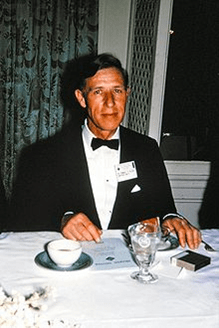
A scientist with huge base of knowledge and experience Konrad Emil Bloch!
German American biochemist, living at the turn of the 19th and 20th century, which contributed to the development of biology and chemistry.
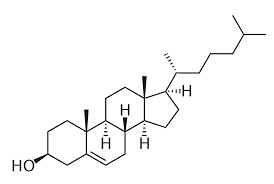
He was awarded with Nobel Prize in Physiology and Medicine in 1964 for discoveries concerning the mechanism and regulation of the cholesterol and fatty acid metabolism. In my opinion thanks to his discoveries recently medicine can prevent diseases such as atherosclerosis affecting an increasing number of people, or for example knowledge about metabolism of fatty acids recently we can use in dietetics.
There are a lot of scientists around the world which may deserve to become famous and appreciation of Nobel Prize.
So why did I decide to tell you about this scientist?
Despite the hard times he lived in, partitions, war, adversity he achieved his success. He was very lucky, also he did not give up, he was working very hard all his life. Bloch`s retirement in 1982 did not mean the end of his scientific career, he continued almost to the end of his life. In my opinion people like Bloch, stubbornly pursuing his goals, should became appreciated.
In order to expand information on his achievements I decided to ask Konrad few questions.
Let’s look closer on Bloch’s discover.
As the source states,
cholesterol synthesis begins by joining three important for metabolism process molecules of acetyl-CoA. It is formed in cells from fatty acids, sugars and some amino acids. The result of the combination is the compound: HMG-CoA, which is further reduced to mevalonate. Mevalonate is converted into five-carbon active units that condense gradually into a 15-carbon unit (farnesyl diphosphate). Two farnesyl diphosphate molecules combine to form 30-carbon squalene, which cyclizes to lanosterol. Lanosterol, in several transformations, losing three one-carbon methyl groups along the way, is converted into 27-carbon cholesterol.
3. How did your path to the success looked like?
Like I said on the beginning of our conversation, from my young ages I had an opportunity to work on cholesterol, and I was able to practice the knowledge gained. This time when I was moving from Germany to Switzerland I was fortunate to find a temporary work in Davos. My assignment there was to investigate the phospholipids of tubercle bacilli. That was my first exposure to biochemical research.
Two years later I moved to United States where I was continuing research on various aspects of terpene and biogenesis of sterol. Therefore I become interested in the unsaturated fatty acids exactly in their enzymatic formation. I finally succeeded to achieve what I had been working on for so long
4. How your past work have an impact on today`s life?
Synthesis and functioning of cholesterol that I have experimentally discovered, is today used for effective prevention of the most problematic and dangerous disease of the present time – arteriosclerosis. It is the cause of heart attacks and venous diseases affecting the modern population.
Guys I hope you had a good time during reading about this amazing biochemist. I am glad I could show you closer person whom we owe so much in science and medicine.
Thanks!
XX
Klaudia
Referneces:
Nobel Media AB (2019) MLA style: Konrad Bloch – Biographical. NobelPrize.org. Available at: https://www.nobelprize.org/prizes/medicine/1964/bloch/biographical/ (Accessed 20 Nov 2019)
Bloch, K. (1964) The biological synthesis of cholesterol. Nobel Lecture. Available at: https://www.nobelprize.org/uploads/2018/06/bloch-lecture.pdf (Accessed 20 Nov 2019)
This is an example post, originally published as part of Blogging University. Enroll in one of our ten programs, and start your blog right.
You’re going to publish a post today. Don’t worry about how your blog looks. Don’t worry if you haven’t given it a name yet, or you’re feeling overwhelmed. Just click the “New Post” button, and tell us why you’re here.
Why do this?
The post can be short or long, a personal intro to your life or a bloggy mission statement, a manifesto for the future or a simple outline of your the types of things you hope to publish.
To help you get started, here are a few questions:
You’re not locked into any of this; one of the wonderful things about blogs is how they constantly evolve as we learn, grow, and interact with one another — but it’s good to know where and why you started, and articulating your goals may just give you a few other post ideas.
Can’t think how to get started? Just write the first thing that pops into your head. Anne Lamott, author of a book on writing we love, says that you need to give yourself permission to write a “crappy first draft”. Anne makes a great point — just start writing, and worry about editing it later.
When you’re ready to publish, give your post three to five tags that describe your blog’s focus — writing, photography, fiction, parenting, food, cars, movies, sports, whatever. These tags will help others who care about your topics find you in the Reader. Make sure one of the tags is “zerotohero,” so other new bloggers can find you, too.

 The daily science.